 EN
EN  VN
VN 
Suddenly, you notice a strange lump in your abdomen, groin, or navel? This could be a sign of a gastrointestinal hernia – a fairly common condition, but one that shouldn't be taken lightly. This article provides a simple and easy-to-understand explanation of gastrointestinal hernias, helping you recognize them early, prevent them properly, and know when urgent treatment is needed!
1. What is a Gastrointestinal Hernia?
Gastrointestinal hernia occurs when a part of an internal organ (such as the intestine or fatty tissue) “slips” out of its normal position through a weak point in the surrounding muscle or tissue wall. You may see or feel a bulge, especially when coughing, straining, or lifting heavy objects.
👉 Common locations: Groin, navel, old surgical scar
2. 5 Common Types of Gastrointestinal Hernias – Which One Is Dangerous?
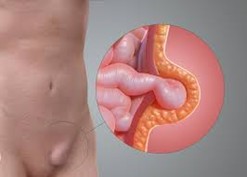
Inguinal hernia (Herniated in the groin): most common. It commonly occurs in men. A portion of the intestine or fat protrudes into the inguinal canal, causing swelling and pain in the groin area (between the thigh and lower abdomen).
Femoral hernia: Less common, usually in women. A bulge appears near the thigh, below the inguinal crease.
Umbilical hernia: Occurs right at the umbilical region. Very common in newborn and pregnant women or after childbirth due to increased abdominal pressure.
Incisional hernia: This occurs at the site of your previous surgery. The old incision weakens the abdominal wall.
Diaphragmatic hernia: The upper part of the stomach "spills" up into the chest cavity through a gap in the diaphragm, which can cause acid reflux heavy.
Figure 1: Inguinal hernia
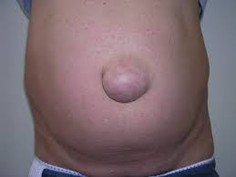 Figure 2: Umbilical hernia
3. Causes of Gastrointestinal Hernias That Everyone Should Know!
Gastrointestinal hernias are often the result of two main factors:
- Weak muscle/tissue:
- It could be due to the muscle structure is weak from birth.
- Old age
- Old surgical scar.
- Sudden or persistent increase in intra-abdominal pressure:
- Frequent, prolonged coughing (due to smoking, bronchitis).
- Frequent constipation, requiring forceful straining during bowel movements.
- Lifting heavy objects with incorrect posture or exceeding one's strength.
- Pregnant.
- Overweight, obesity.
- Playing sports too strenuously.
4. Early Warning Signs – Don't Ignore Them!
- A noticeable swelling/bulge: This is the most typical and is early warning signs
- They appear in the groin, navel, abdominal area with old surgical scars, or near the thighs.
- Your voice gets louder when you stand up straight, cough, sneeze, or strain.
- It will deflate or disappear when you lie down and press gently on it.
- A feeling of pressure, heaviness, or sharp pain: Especially when you exercise vigorously, lift heavy objects, cough, or bend down. This feeling may lessen with rest.
🚨 DANGEROUS signs requiring IMMEDIATE EMERGENCY CARE (Strangulated hernia):
- The lump is HARD, SEVERELY PAINFUL, and cannot be pushed up or down.
- Nausea, vomiting.
- Bloated stomach, inability to pass gas or have a bowel movement.
- Fever.
If you have these signs, please go to the hospital immediately. because it can cause intestinal necrosis, which is life-threatening!
5. Dangerous Complications
If left untreated, especially when infected... strangulated hernia, you might encounter:
- Intestinal obstruction: The intestine is blocked, preventing food from passing through.
- Intestinal necrosis: The affected section of the intestine is cut off from blood supply, leading to cell death.
This is surgical emergency extremely dangerous.
6. Chẩn Đoán & Giải Pháp Điều Trị
6.1. How does the doctor make a diagnosis?
- Clinical examination: This is the main thing! The doctor will ask you to stand, cough, and strain so they can observe the bulge.
- Abdominal ultrasound or CT scan: Helps to visualize the location, size, and type of hernia more clearly, especially for small or hard-to-see masses.
6.2. Main treatment method: SURGERY
- Why is surgery necessary? To push the protruding organ back into its original position and tThe most important thing is to suture the weakened/torn muscle/tissue area securely., preventing the recurrence of gastrointestinal hernias.
- Common surgical methods:
- Laparoscopic surgery: The doctor makes a few small incisions, uses a camera and specialized instruments to repair the damage. Less pain, faster recovery., good aesthetics.
- Open surgery: Make a larger incision directly at the hernia site. This is still effective, especially for complex cases.
- Post-surgery: Usually, things go quickly; you can go home after a few days if there are no complications. You need to follow your doctor's instructions regarding exercise and wound care.
- Is surgery always necessary?
- For strangulated hernias: Emergency surgery is required.
- For common hernias that cause significant pain and discomfort, and interfere with daily life, early surgery is recommended.
- For small, asymptomatic hernias: further monitoring is possible.
7. Expert Tips for Prevention

- Maintain a healthy weight: Avoid being overweight or obese, as this puts excessive pressure on the abdomen.
- Eat a diet rich in fiber: Prevent constipation (eat green vegetables, fruits, and whole grains). Drink plenty of water.
- Lifting heavy objects the RIGHT WAY:
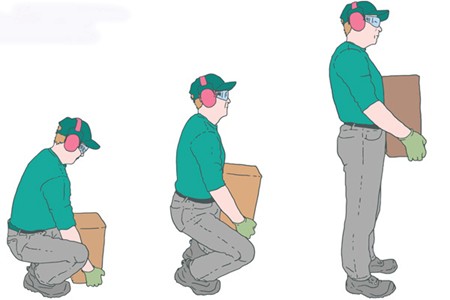
- Contract your abdominal muscles. keep your back straight.
- Using force from the legs, do not bend over to lift the object.
- Don't push yourself too hard! Ask for help or use a trolley.
- Quit smoking: Reduces chronic cough – a cause of abdominal pressure.
- Exercise regularly: Focus on exercises that strengthen your abdominal and pelvic floor muscles. (like Kegel exercises), but you need to practice them. correct technique to avoid causing harm, avoid strenuous movements that cause a sudden increase in abdominal pressure.
- Treat and completely resolve the illnesses causing persistent coughs, sneezing, and constipation.
8. When Should I See a Doctor Immediately?
➡️ Let's Schedule an appointment this week immediately if:
- Detect any unusual lumps or swellings. any area on the abdomen, groin, hip, navel, or old surgical scar.
- Feel pain, discomfort it persists in these areas, especially during exercise.
🚑 GO TO THE EMERGENCY HOSPITAL IMMEDIATELY if you have the signs of strangulated hernia:
- The swelling is intensely painful, large, red, hard, and cannot be pushed up or down.
- Nausea and frequent vomiting.
- Severe abdominal cramps and bloating.
- Unable to have a bowel movement or pass gas.
- Fever.
Gastrointestinal hernias don't heal on their own, but they are completely treatable and can be effectively prevented! Understanding the disease helps you proactively protect your health. Don't hesitate to see a doctor as soon as you suspect any symptoms; early treatment is always much simpler and safer.
References
- National Library of Medicine. Hernia. MedlinePlus. Updated July 1, 2021. Accessed June 7, 2025. https://medlineplus.gov/hernia.html
#hernia #herniasurgery #laparoscopicsurgery #opensurgery #strangulatedhernia #surgicalemergency #intestinalobstruction #intestinalnecrosis #herniatreatment #herniadiagnosis #herniasigns #abdominalbulge #inguinalhernia #umbilicalhernia #lowerabdominalpain #herniawarnings #herniadangerous
