EARLY DIAGNOSIS AND TREATMENT OF GASTROINTESTINAL CANCER THROUGH REGULAR HEALTH CHECKUPS
03 Jun
Esophageal cancer is a serious malignancy, often detected late due to a lack of clear symptoms in the early stages, with a 5-year survival rate of less than 20%. However, with advances in medicine, especially gastrointestinal endoscopy, early detection and treatment of esophageal cancer have become possible, offering many patients a chance of complete cure.
Patient's story:
Mr. Nguyen Van A., 54 years old, residing in Hanoi, had no unusual digestive symptoms. During a routine health check-up, he underwent a gastrointestinal endoscopy. The results revealed a small lesion, approximately 1 cm in size, on the esophageal mucosa. A biopsy confirmed it to be early-stage esophageal cancer.
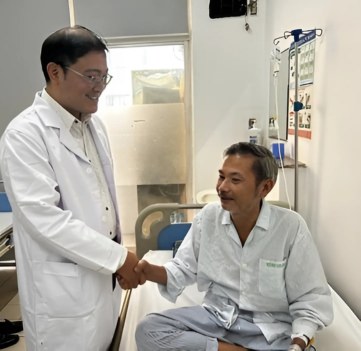
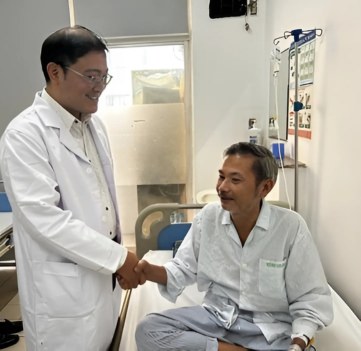
Image 1: Dr. Nguyen The Phuong – Head of the Department of Upper Gastrointestinal Pathology – Center for Gastroenterology and Hepatology, Member of the Executive Board and Deputy Head of the Gastrointestinal Pathology Committee of the Vietnam Society of Interventional Gastrointestinal Endoscopy (VIGES), lecturer in Internal Medicine, Hanoi Medical University.
Treatment method:
Mr. A was advised to undergo endoscopic submucosal dissection (ESD). This is an advanced method that allows for the complete removal of tumors in the gastrointestinal mucosa without surgery. The procedure is gentle; the patient experiences minimal pain and recovers quickly. After the intervention, Mr. A was discharged shortly after the procedure and did not require additional treatment such as chemotherapy or radiation therapy.
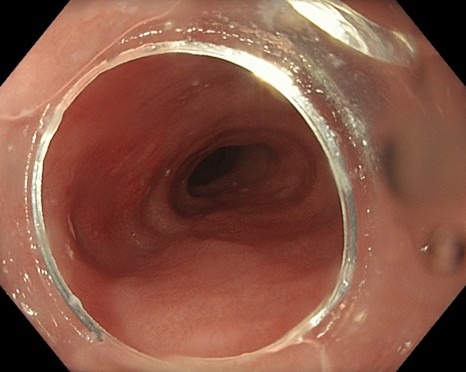
Image 2: Early esophageal cancer lesions are easily missed with conventional white light endoscopy.
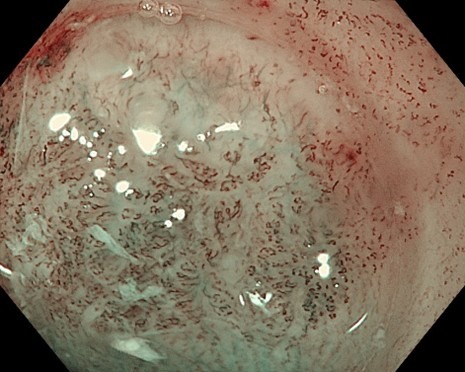
Image 3: Microstructure and microcapillaries of the lesion are accurately observed and evaluated on magnified endoscopy.
Benefits of early detection and treatment:
High-resolution, magnified, and image-enhanced gastrointestinal endoscopy can detect early-stage esophageal cancer lesions in the mucosal layer with a very low risk of metastasis (0-4%), paving the way for endoscopic treatments to achieve radical cure.
High survival rate: According to statistics, the 5-year survival rate for patients with stage I esophageal cancer is 80-90%.
Reduced complications: ESD is a minimally invasive procedure that minimizes damage to surrounding tissues and the risk of complications, allowing for faster patient recovery.
Improving quality of life: Early treatment helps patients avoid complex therapies, preserve esophageal function, and quickly return to normal life.
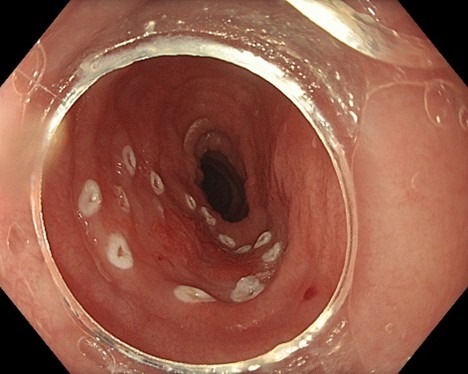
Image 4: Early esophageal cancerous lesion is marked around the edges – this is one step of the endoscopic submucosal dissection (ESD) technique.
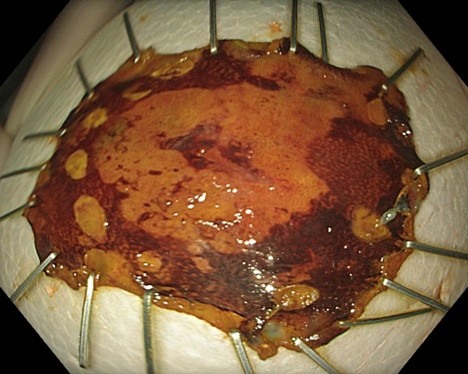
Image 5: Early esophageal cancer lesion removed en bloc using endoscopic submucosal dissection (ESD).
Recommendation:
Việc khám sức khỏe định kỳ, đặc biệt là nội soi tiêu hóa, đóng vai trò quan trọng trong phát hiện sớm các tổn thương tiền ung thư hoặc ung thư giai đoạn đầu. Những người trên 50 tuổi hoặc có yếu tố nguy cơ như hút thuốc lá, uống rượu bia, tiền sử gia đình mắc ung thư thực quản nên thực hiện tầm soát định kỳ để bảo vệ sức khỏe.
Hình ảnh 5: Tổn thương ung thư sớm thực quản được lấy bỏ nguyên khối (en bloc) với kĩ thuật cắt tách dưới niêm mạc (ESD)
Hãy quan tâm đến sức khỏe của bạn và gia đình bằng cách thực hiện khám sức khỏe định kỳ và tầm soát ung thư tiêu hóa. Phát hiện và điều trị sớm không chỉ cứu sống bạn mà còn mang lại chất lượng cuộc sống tốt hơn.
Trung tâm Tiêu hóa gan mật, bệnh viện Bạch Mai được đầu tư thiết bị nội soi tiên tiến hiện đại trên thế giới, cùng với đội ngũ bác sĩ được đào tạo chuyên sâu, có nhiều kinh nghiệm trong nội soi tiêu hóa chẩn đoán cũng như nội soi can thiệp điều trị ung thư tiêu hóa sớm.
 EN
EN  VN
VN