 EN
EN  VN
VN 
Research objectives:
Determining the prevalence of colorectal motility disorders using contrast-enhanced capsules and some related factors in patients with constipation at the Gastroenterology - Hepatology Center, Bach Mai Hospital.
1. Introduction
Constipation is a common problem in the community, affecting approximately 20% of the population, with women accounting for about 80-90% of cases. It is an uncomfortable condition that reduces quality of life and can lead to many complications if left untreated. In this patient group, structured management for effective treatment is crucial, as the majority do not respond to initial treatments such as dietary changes and conventional laxatives.
One of the key factors to assess is colonic transit time, to determine whether the colon is functioning normally or is sluggish. However, this assessment based solely on patient descriptions is often difficult and inaccurate. Therefore, when initial treatment is unsuccessful, it is necessary to consider using functional diagnostic methods, including assessing colonic transit time using contrast capsules.
2. Transit Capsules
a. Definition
Transit-Pellets contain small, radiopaque white markers made from barium sulfate (BaSO₄) encased in a hard-shelled HPMC (Hydroxypropyl Methylcellulose) capsule. These capsules are gelatin-free and comply with pharmaceutical standards. The purpose of the capsules is to transport these markers into the stomach, where they dissolve and pass through the digestive system, eventually being excreted in the feces.
b. Safety
Transit-Pellets are smaller than 8mm and come in two shapes: tubular and ring. Signs with specific gravity between 1.2 and 1.6 have been tested and proven effective and safe. The device has been shown to be safe and effective compared to standard devices (predicate devices) in measuring colonic transit time, regardless of the shape of the signs.
The use of barium sulfate radiopaque markers for measuring colonic transit time has been practiced for over 45 years. Barium sulfate is a radiopaque contrast agent with a sufficiently high density to resist X-ray transmission, thus making it readily visible on X-ray images. In clinical studies, the efficacy and safety of the device have been confirmed in measuring colonic transit time, particularly in a study of 1054 children and adolescents, which showed no adverse events related to the device in any of the investigations.
c. Applications
• If colonic transit time is slow, consider strengthening constipation treatment with changes in laxatives, motility stimulants, etc.
• If a patient has severe constipation but completely normal transit time, there is a high probability that the patient has altered sensitivity, as in irritable bowel syndrome (IBS), and treatment should be adjusted accordingly.
• In a small number of patients with colonic inertia, surgery may be considered, but if the cecal-ascending colon transit time is normal, this surgery is not indicated.
• If transit time through the rectum and sigmoid colon is slow, the possibility of outlet obstruction, including pelvic floor dysfunction, should be considered.
d. Practical instructions

Hình ảnh 1: Hướng dẫn sử dụng nhanh với viên nang đánh giá nhu động đại trực tràng Transit – Pellets
Colonial transit time is calculated as the mean oral-to-rectal transit time (OATT, from mouth to rectum) of daily swallowed signet dose. Because colonic transit time accounts for a large portion of oral-to-rectal transit time, OATT is used as an indicator to measure transit time.
colonic transit time. Transit time is equivalent to the number of daily sign-target doses remaining in the body. With a daily dose of ten signs, transit time is calculated using the formula:
Oral-to-rectal transit time (OATT) =
| Sex | Ascending colon | Transverse colon | Descending colon | Sigmoid colon and rectum | Total |
| Male | |||||
| Female |
Table 1: Results of transit times in each region of the colon
3. Clinical Case
Pham Van Q, 31 years old, male.
Medical history: No prior medical conditions have been detected.
Medical history: Passing hard, lumpy stools every 3 days, straining during each bowel movement, sometimes requiring the use of laxatives.
Diet:
- – Eat 4-5 bowls of white rice per day, eat less fried and greasy food, eat boiled food. Eat plenty of cabbage (about 1 bowl per cabbage), no alcohol, no cigarettes, no coffee, and no processed foods.
- – Drink 1-1.5 liters per day.

The patient underwent transcatheter colon transit time measurement using Transit Pellets.
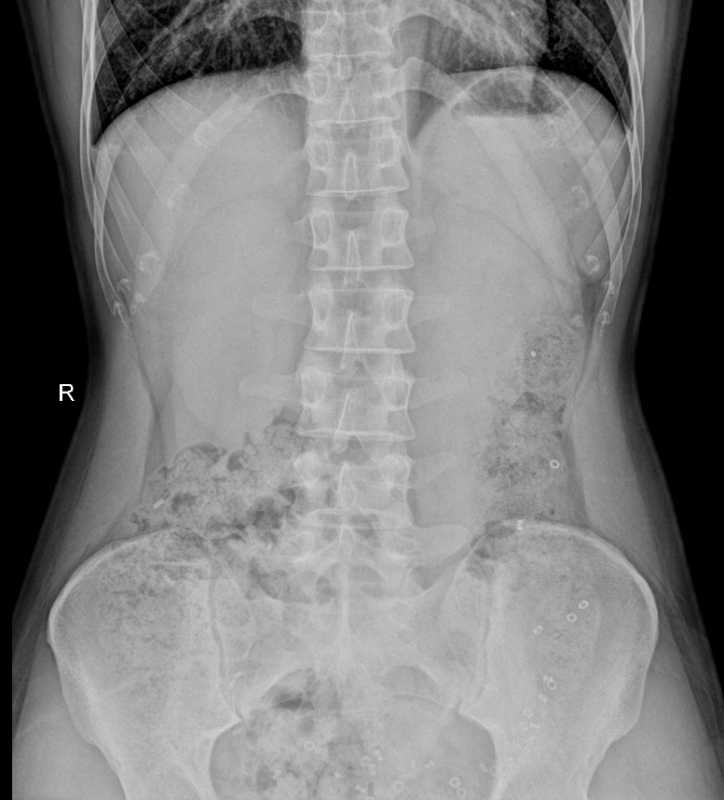
Figure 2: Image of the radiopaque material of the Transit Pellets capsule on the X-ray image on day 7.
With the above results, we counted 24 contrast materials remaining and estimated OTTA = 2.4 days. The patient is male, so this result is consistent with slightly weak peristalsis. However, as we can see, the contrast material is mainly concentrated in the sigmoid colon-rectum, suggesting a pelvic floor disorder. The patient has been recommended to undergo further functional investigations such as anorectal manometry.
4. Conclusion
A study of colorectal motility in patients with constipation using contrast-enhanced capsules at the Gastroenterology and Hepatology Center, Bach Mai Hospital, indicated that the use of contrast-enhanced capsules (Transit-Pellets) is a useful and safe tool for assessing colonic transit time in constipated patients. Results from the studies showed a significant proportion of patients had impaired colonic motility, especially in cases with prolonged constipation or those unresponsive to initial treatment.
This method not only helps determine colonic transit time but also assists physicians in making appropriate treatment decisions, from dietary adjustments and laxative use to investigating factors related to pelvic floor dysfunction or even surgical interventions if necessary. Measuring colonic transit time using contrast capsules is a significant step forward in optimizing the diagnosis and treatment of constipation, contributing to improved quality of life for patients.
